
The Banjo Paterson High Country Trail
Bookham and Conroy's Gap
Bookham
Bogalong or Bookham as it has been named since Lady Franklin stayed there in 1839, is a small village with a long Banjo Paterson poem and a big story.
With his wonderful eye for detail Banjo Paterson tells his own story about Bookham or Bogalong.
‘It was New Year’s Day and a general holiday. My father was away, and the station rouseabout, having filled the water barrel, cut the wood, and fed the fowls, was free to go to the Bogalong races some eight miles away.
‘Bogalong was a township on the main south road, and consisted of two pubs half a mile apart, with nothing in between.’
Paterson went on to describe the racecourse:
‘The track was about half a mile out of town, unfenced, with no grandstand, and mostly laid out through a gum and stringy-bark scrub. The racehorses were tied to saplings, as were hundreds of other horses ridden by wild men from the Murrumbidgee Mountains who all brought their dogs. …
‘I had ridden over on a pony with a child’s saddle, glancing at the pony to see he was all right, I saw a Murrumbidgee mountaineer about seven feet high taking the saddle off my pony and putting it on a racehorse. Running over to him, I managed to gasp out ‘that’s my saddle!’
“Right-oh, son he said, “I won’t hurt it. Its just the very thing the doctor ordered.’’
‘My new friend assured me that Pardon could not have won without my saddle. It had made all the difference. Years afterwards, I worked the incident into a sort of ballad called ‘Old Pardon the son of Reprieve’ (1888).
Reference: A B Paterson, ‘Banjo Paterson tells his own Story: In the Days of the Gold Escorts, The Sydney Morning Herald, (4 February 1939)
https://trove.nla.gov.au/newspaper/article/17558343
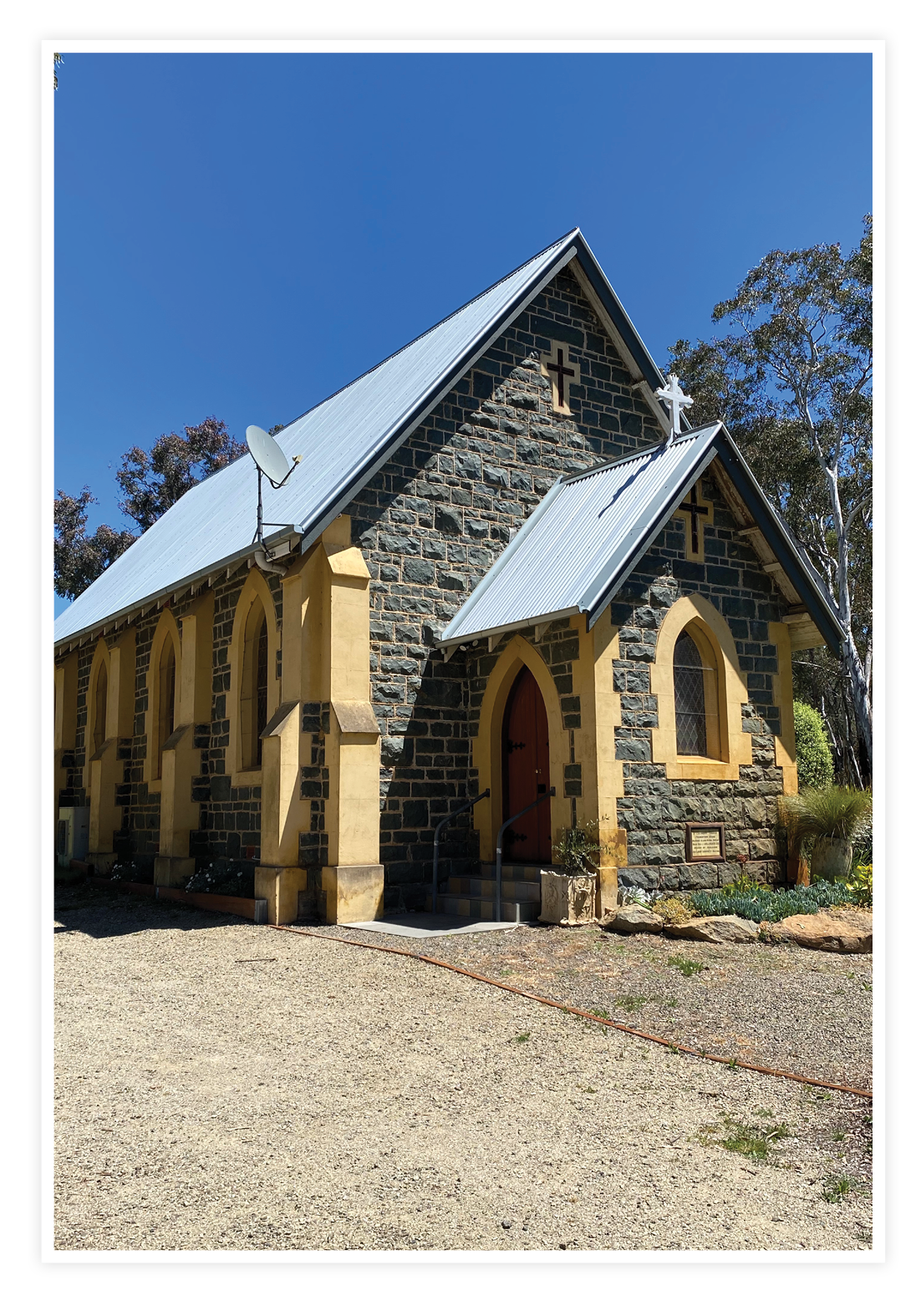
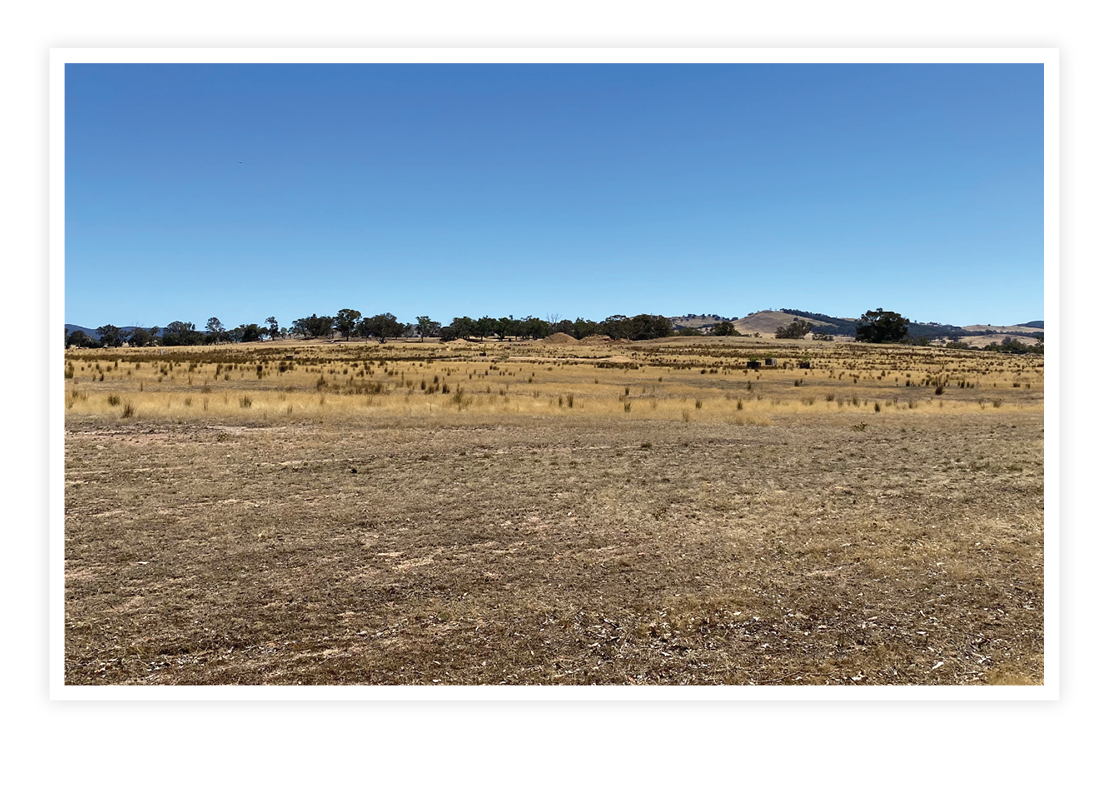
The location of the Bookham Racecourse is a mystery. It could lie among the saplings and clearer ground ‘about half a mile out of town’, but the enigmatic Paterson doesn’t tell us where. Some say that it would have a dip in which the crowd would lose sight of the race and things might happen that change the outcome of the race before the horses reach the finish.
Old Pardon the Son of Reprieve
Old Pardon the Son of Reprieve
You never heard tell of the story?
Well, now, I can hardly believe!
Never heard of the honour and glory
Of Pardon, the son of Reprieve?
But maybe you're only a Johnnie
And don't know a horse from a hoe?
Well, well, don't get angry, my sonny,
But, really, a young 'un should know.
They bred him out back on "the Never,"
His mother was Mameluke breed.
To the front—and then stay there—was ever
The root of the Mameluke creed.
He seemed to inherit their wiry
Strong frames, and their pluck to receive—
As hard as a flint and as fiery
Was Pardon, the son of Reprieve.
We ran him at many a meeting
At crossing and gully and town,
And nothing could give him a beating—
At least when our money was down.
For weight wouldn't stop him, nor distance;
Nor odds, though the others were fast,
He'd race with a dogged persistence,
And wear them all down at the last.
At the Turon the Yattendon filly
Led by lengths at the mile and-a-half,
And we all began to look silly
While her crowd were starting to laugh;
But the old horse came faster and faster,
His pluck told its tale, and his strength,
He gained on her, caught her, and passed her,
And won it, hands-down, by a length.
And then we swooped down on Menindie
To run for the President's Cup—
Oh! That’s a sweet township—a shindy
To them is board, lodging, and sup.
Eye-openers they are, and their system
Is never to suffer defeat;
It's "win, tie, or wrangle"—to best 'em,
You must lose 'em, or else it's "dead heat."
We strolled down the township and found 'em
At drinking and gaming and play,
If sorrows they had, why they drowned 'em,
And betting was soon under way.
Their horses were good 'uns and fit 'uns,
There was plenty of cash in the town;
They backed their own horses like Britons,
And Lord! how we rattled it down!
With gladness we thought of the morrow,
We counted our wagers with glee,
A simile homely to borrow—
"There was plenty of milk in our tea."
You see we were green; and we never
Had even a thought of foul play,
Though we well might have known that the clever
Division would "put us away."
Experience "docet," they tell us,
At least, so I've frequently heard,
But, "dosing" or "stuffing," those fellows
Were up to each move on the board;
They got to his stall—it is sinful
To think what such villains would do—
And they gave him a regular skinful
Of barley—green barley—to chew.
He munched it all night, and we found him
Next morning as full as a hog—
The girths wouldn't nearly meet round him,
He looked like an overfed frog;
We saw we were done like a dinner—
The odds were a thousand to one
Against Pardon turning up winner,
'Twas cruel to ask him to run.
We got to the course with our troubles,
A crestfallen couple were we;
And we heard the books calling the doubles—
A roar like the surf of the sea;
And over the tumult and louder
Rang "Any price Pardon, I lay!"
Says Jimmy, "The children of Judah
Are out on the warpath to day."
Three miles in three heats:—Ah, my sonny,
The horses in those days were stout,
They had to run well to win money,
I don't see such horses about.
Your six-furlong vermin that scamper
Half-a-mile with their feather-weight up,
They wouldn't earn much of their damper
In a race like the President's Cup.
The first heat was soon set a-going,
The Dancer went off to the front;
The Don on his quarters was showing,
With Pardon right out of the hunt,
He rolled and he weltered and wallowed,
You'd kick your hat faster, I'll bet.
They finished all bunched and he followed
All lathered and dripping with sweat.
But troubles came thicker upon us,
For while we were rubbing him dry
The stewards came over to warn us—
"We hear you are running a bye!
If Pardon don't spiel like tarnation
And win the next heat—if he can,
He'll earn a disqualification,
Just think over that, now, me man!"
Our money all gone and our credit,
Our horse couldn't gallop a yard,
And then people thought that we did it!
It really was terribly hard.
We were objects of mirth and derision
To the folk in the lawn and the stand,
And the yells of the clever division
Of "Any price, Pardon!" were grand.
We still had a chance for the money,
Two heats still remained to be won,
If both fell to us—why, my sonny,
The clever division were done
And Pardon was better, we reckoned,
His sickness was passing a way,
So he went to the post for the second
And principal heat of the day.
They're off! and away with a rattle,
Like dogs from the leashes let slip,
And right at the back of the battle
He followed them under the whip.
They gained ten good lengths on him quickly,
He dropped right away from the pack;
I tell you it made me feel sickly
To see the blue jacket fall back.
Our very last hope had departed –
We thought the old fellow was done,
When all of a sudden he started
To go like a shot from a gun.
His chances seemed slight to embolden
Our hearts; but, with teeth firmly set
We thought, “Now or never! The old ‘un
May reckon with some of ‘em yet.’
Then loud rose the warcry for Pardon;
He swept like the wind down the dip,
And over the rise by the garden
The jockey was done with the whip
The field were at sixes and sevens
The pace at the first had been fast --
And hope seemed to drop from the heavens,
For Pardon was coming last.
And how did he come! It was splendid;
He gained on them yards every bound,
Stretching out like a greyhound extended,
His girth laid right down on the ground.
A shimmer of silk in the cedars
As into the running they wheeled,
And out flashed the whips on the leaders,
For Pardon had collared the field.
Then right through the ruck he came sailing,
I knew that the battle was won—
The son of Haphazard was failing,
The Yattendon filly was done;
He cut down the Don and the Dancer,
He raced clean away from the mare—
He's in front! Catch him now if you can, sir!
And up went my hat in the air!
Then loud from the lawn and the garden
Rose offers of "Ten to one on!"
"Who'll bet on the field? I back Pardon!"
No use, all the money was gone.
He came for the third heat light-hearted,
A-jumping and dancing about,
The others were done ere they started,
Crestfallen, and tired, and worn out.
He won it, and ran it much faster
Than even the first, I believe—
Oh, he was the daddy, the master
Was Pardon, the son of Reprieve.
He showed 'em the method to travel—
The boy sat as still as a stone—
They never could see him for gravel;
He came in hard-held, and alone.
****
But he's old – and his eyes are grown hollow;
Like me with my thatch of the snow;
When he dies, then I hope I may follow,
And go where the racehorses go.
I don't want no harping nor singing,
Such things with my style don't agree;
Where the hoofs of the horses are ringing
There's music sufficient for me.
And surely the thoroughbred horses
Will rise up again and begin
Fresh racing on far-away courses,
And p'raps they might let me slip in.
It would look rather well the race-card on
'Mongst Cherubs, and Seraphs, and things,
"Angel Harrison's black gelding Pardon,
Blue halo, white body and wings."
And if they have racing hereafter
(And who is to say they will not?),
When the cheers and the shouting and laughter
Proclaim that the battle grows hot;
As they come down the racecourse a-steering,
He'll rush to the front, I believe;
And you’ll hear the great multitude cheering
For Pardon, the son of Reprieve.
The Bulletin, 2 December 1888
There is reference to Pardon in ‘The Man from Snowy River’ at the beginning of the second verse of ‘Old Pardon the Son of Reprieve’:
‘There was Harrison, who made his pile when Pardon won the cup,
The old man with his hair as white as snow;
But few could ride beside him when his blood was fairly up—
He would go wherever horse and man could go.
And Clancy of the Overflow came down to lend a hand,
No better horseman ever held the reins;
For never horse could throw him while the saddle-girths would stand—
He learned to ride while droving on the plain.'
It is often the case in regional Australia that there is much more to small towns than meets the eye. The story of Paterson attending the New Year’s Eve Bogalong races is not the village’s only story. The famous explorer Paul Edmund Strzelecki is believed to have travelled via Ellerslie Station and Adelong, stopped also at Bookham.
Bookham is also proud of its Second World War hero Dr Fagan.
Dr Kevin Fagan AO (1909 – 1992) enlisted in the Australian Army Medical Corps in 1940 and was posted to the 8th Division in Malaya. After Singapore fell on 15 February 1942, he became a prisoner of war.
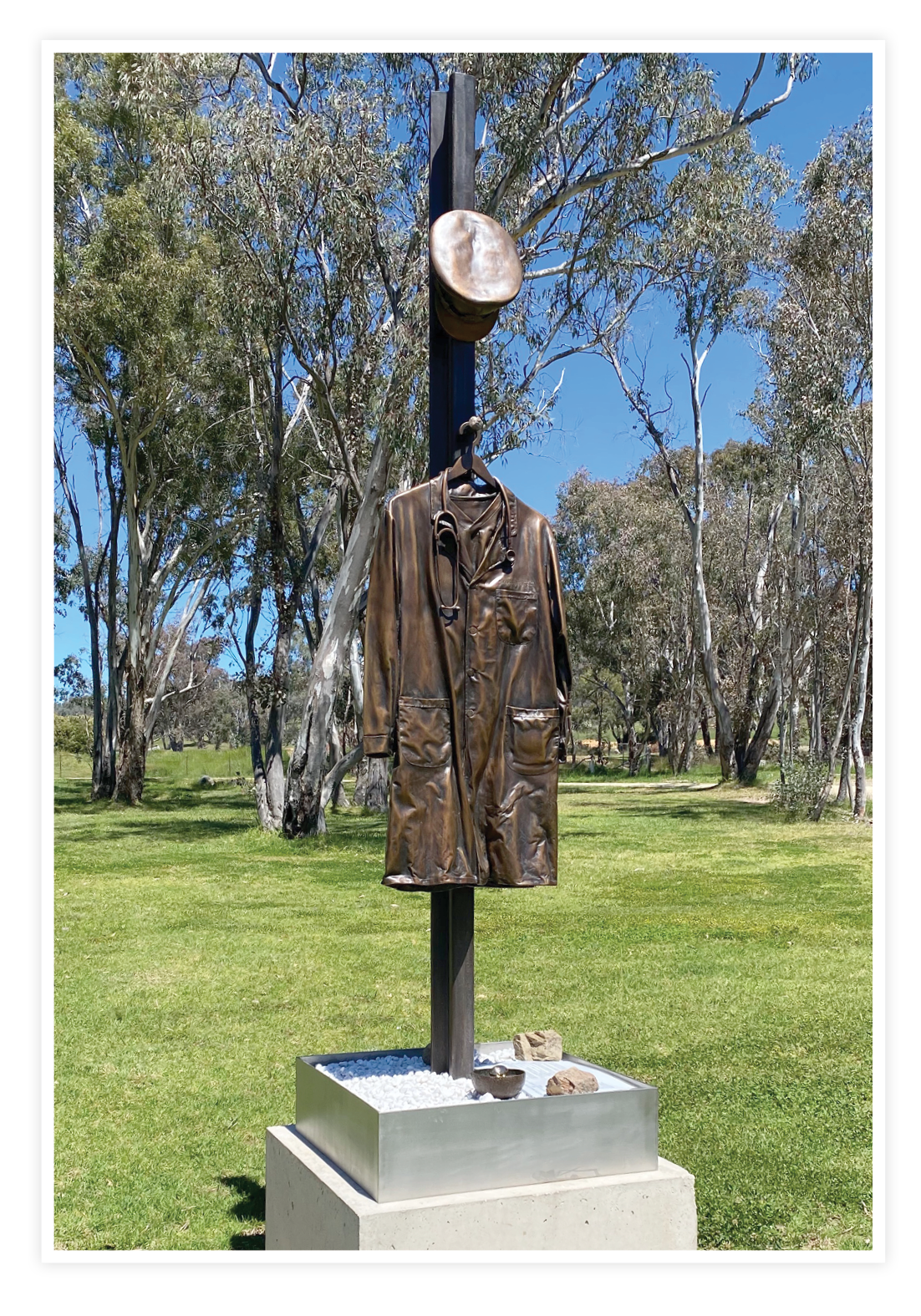
No matter whether he was in Changi Prisoner of War Camp, or working on the Thai-Burma Railway, Dr Fagan continued his work treating patients with malaria, cholera, dysentery, diarrhoea, and malnutrition. He treated those with fractures and needing amputations. After the Second World War he continued to serve his community in Bookham. His service is poignantly remembered in a bronze sculpture by multidisciplinary contemporary artist and sculptor Louis Pratt with the uniform (symbolising Dr Fagan’s wartime service) hanging on a coat hanger made from a piece of railway line (symbolising the notorious Burma Railway). Five gleaming, bronze eggs symbolise Dr Kevin Fagan’s generosity.
Commemoration of two beloved figures in Bookham’s history – Banjo Paterson who served as a Light Horseman in the First World War and Major Kevin Fagan AO who devoted his life to serving humanity in times of war and peace must add a very memorable quality to Anzac Day and Remembrance Days in Bookham.
The Hume Freeway, the one time Great Southern Road, now bypasses Bookham. The village is well worth visiting for its stories of Paterson, its heroes and yesteryear.
Conroy’s Gap
Conroy’s Gap is on the Hume Freeway, only about 21km or 13 miles from Binalong. ‘Conroy’s Gap’ is named for the murder of John Conroy by a ticket-of-leave man named William Collins. The report of the murder can be found in the
Yass Courier (Tuesday 24 March, 1868). With a keen ear, the local story perhaps inspired Paterson to write the poem, the story of a rough crowd, horse theft, hard riding and a jilted girl at ‘the shadow of death’, a shanty beneath Conroy’s Gap.
Conroy's Gap
Conroy's Gap
This was the way of it, don't you know –
Ryan was "wanted" for stealing sheep,
And never a trooper, high or low,
Could find him — catch a weasel asleep!
Till Trooper Scott, from the Stockman's Ford —
A bushman, too, as I've heard them tell —
Chanced to find him drunk as a lord
Round at the Shadow of Death Hotel.
D'you know the place? It's a wayside inn,
A low grog-shanty — a bushman trap,
Hiding away in its shame and sin
Under the shelter of Conroy's Gap —
Under the shade of that frowning range
The roughest crowd that ever drew breath —
Thieves and rowdies, uncouth and strange,
Were mustered round at the "Shadow of Death".
The trooper knew that his man would slide
Like a dingo pup, if he saw the chance;
And with half a start on the mountain side
Ryan would lead him a merry dance.
Drunk as he was when the trooper came,
to him that did not matter a rap —
Drunk or sober, he was the same,
The boldest rider in Conroy's Gap.
"I want you, Ryan," the trooper said,
"And listen to me, if you dare resist,
So help me heaven, I'll shoot you dead!"
He snapped the steel on his prisoner's wrist,
And Ryan, hearing the handcuffs click,
Recovered his wits as they turned to go,
For fright will sober a man as quick
As all the drugs that the doctors know.
There was a girl in that rough bar
Went by the name of Kate Carew,
Quiet and shy as the bush girls are,
But ready-witted and plucky, too.
She loved this Ryan, or so they say,
And passing by, while her eyes were dim
With tears, she said in a careless way,
"The Swagman's round in the stable, Jim."
Spoken too low for the trooper's ear,
Why should she care if he heard or not?
Plenty of swagmen far and near —
And yet to Ryan it meant a lot.
That was the name of the grandest horse
In all the district from east to west;
In every show ring, on every course,
They always counted The Swagman best.
He was a wonder, a raking bay —
One of the grand old Snowdon strain —
One of the sort that could race and stay
With his mighty limbs and his length of rein.
Born and bred on the mountain side,
He could race through scrub like a kangaroo;
The girl herself on his back might ride,
And The Swagman would carry her safely through.
He would travel gaily from daylight's flush
Till after the stars hung out their lamps;
There was never his like in the open bush,
And never his match on the cattle-camps.
For faster horses might well be found
On racing tracks, or a plain's extent,
But few, if any, on broken ground
Could see the way that The Swagman went.
When this girl's father, old Jim Carew,
Was droving out on the Castlereagh
With Conroy's cattle, a wire came through
To say that his wife couldn't live the day.
And he was a hundred miles from home,
As flies the crow, with never a track
Through plains as pathless as ocean's foam;
He mounted straight on The Swagman's back.
He left the camp by the sundown light,
And the settlers out on the Marthaguy
Awoke and heard, in the dead of night,
A single horseman hurrying by.
He crossed the Bogan at Dandaloo,
And many a mile of the silent plain
That lonely rider behind him threw
Before they settled to sleep again.
He rode all night, and he steered his course
By the shining stars with a bushman's skill,
And every time that he pressed his horse
The Swagman answered him gamely still.
He neared his home as the east was bright.
The doctor met him outside the town
"Carew! How far did you come last night?"
"A hundred miles since the sun went down."
And his wife got round, and an oath he passed,
So long as he or one of his breed
Could raise a coin, though it took their last,
The Swagman never should want a feed.
And Kate Carew, when her father died,
She kept the horse and she kept him well;
The pride of the district far and wide,
He lived in style at the bush hotel.
Such was The Swagman; and Ryan knew
Nothing about could pace the crack;
Little he'd care for the man in blue
If once he got on The Swagman's back.
But how to do it? A word let fall
Gave him the hint as the girl passed by;
Nothing but "Swagman — stable wall;
Go to the stable and mind your eye."
He caught her meaning, and quickly turned
To the trooper: "Reckon you'll gain a stripe
By arresting me, and it's easily earned;
Let's go to the stable and get my pipe,
The Swagman has it." So off they went,
And as soon as ever they turned their backs
The girl slipped down, on some errand bent
Behind the stable and seized an axe.
The trooper stood at the stable door
While Ryan went in quite cool and slow,
And then (the trick had been played before)
The girl outside gave the wall a blow.
Three slabs fell out of the stable wall —
'Twas done 'fore ever the trooper knew —
And Ryan, as soon as he saw them fall,
Mounted The Swagman and rushed him through.
The trooper heard the hoof-beats ring
In the stable yard, and he slammed the gate,
But The Swagman rose with a mighty spring
At the fence, and the trooper fired too late
As they raced away, and his shots flew wide,
And Ryan no longer need care a rap,
For never a horse that was lapped in hide
Could catch The Swagman in Conroy's Gap.
And that's the story. You want to know
If Ryan came back to his Kate Carew;
Of course he should have, as stories go,
But the worst of it is this story's true:
And in real life it's a certain rule,
Whatever poets and authors say
Of high-toned robbers and all their school,
These horse thief fellows aren't built that way.
Come back! Don't hope it — the slinking hound,
He sloped across to the Queensland side,
And sold The Swagman for fifty pound,
And stole the money, and more beside.
And took to drink, and by some good chance
Was killed — thrown out of a stolen trap.
And that was the end of this small romance,
The end of the story of Conroy's Gap.
The Bulletin, 20 December 1890
The Travelling Post Office
The Travelling Post Office
The roving breezes come and go, the reed-beds sweep and sway,
The sleepy river murmers low, and loiters on its way,
It is the land of lots o’time along the Castlereagh.
****
The old man’s son had left the farm, he found it dull and slow,
He drifted to the great North-west, where all the rovers go.
“He’s gone so long,” the old man said, “he’s dropped right out of mind,
But if you’d write a line to him I’d take it very kind;
He’s shearing here and fencing there, a kind of waif and stray—
He’s droving now with Conroy’s sheep along the Castlereagh.
”The sheep are travelling for the grass, and travelling very slow;
They may be at Mundooran now, or past the Overflow,
Or tramping down the black-soil flats across by Waddiwong;
But all those little country towns would send the letter wrong.
The mailman, if he’s extra tired, would pass them in his sleep;
It’s safest to address the note to 'Care of Conroy’s sheep,’
For five and twenty thousand head can scarcely go astray,
You write to 'Care of Conroy’s sheep along the Castlereagh.'”
****
By rock and ridge and riverside the western mail has gone
Across the great Blue Mountain Range to take that letter on.
A moment on the topmost grade, while open fire-doors glare,
She pauses like a living thing to breathe the mountain air,
Then launches down the other side across the plains away
To bear that note to “Conroy’s sheep along the Castlereagh,”
And now by coach and mailman’s bag it goes from town to town,
And Conroy’s Gap and Conroy’s Creek have marked it “Further down.”
Beneath a sky of deepest blue, where never cloud abides,
A speck upon the waste of plain the lonely mail-man rides.
Where fierce hot winds have set the pine and myall boughs asweep
He hails the shearers passing by for news of Conroy’s sheep.
By big lagoons where wildfowl play and crested pigeons flock,
By camp-fires where the drovers ride around their restless stock,
And pass the teamster toiling down to fetch the wool away
My letter chases Conroy’s sheep along the Castlereagh.
The Bulletin, 10 March 1894




Acknowledgements
The Upper Murray Historical Society wishes to acknowledge all of the above organisations for their support and thank the
National Library of Australia (NLA) together with
Mr Alistair Campbell for their assistance and their permission to use images from the
Papers of Andrew Barton ‘Banjo’ Paterson (MS 10483), NLA. For more information
click here.
History brought to life by
CalvertandCo.com
© Copyright protected 2026, Calvert & Co, Honor Auchinleck, and The Man From Snowy River Museum. All rights reserved.