
The Banjo Paterson High Country Trail
Gundagai, Tumut and Red Hill Station
Banjo Paterson wrote ‘On the Road to Gundagai’ in 1905, the same year as he took part with John McLean Arnott in the Dunlop Reliability Trial from Sydney to Melbourne along the Great Southern Road.
Arnott and Paterson completed the Trial, averaging 18 miles per hour in John Arnott’s Innes car. In his 1939 memoir serialised in The Sydney Morning Herald Paterson described the journey as a ‘trial’, perhaps in every sense of the word. Apparently the ‘worst part of the route was along a bush track on the Gundagai – Albury section.’ Evening News, 24 February 1905).
Paterson would have known both the Prince Alfred Bridge (completed in 1867) and the railway viaduct built in 1903 crossing the Murrumbidgee floodplain at Gundagai. Because of the perilous state of the road in many places, many earlier settlers favoured investment in the railway rather than the roads. Crossing the Murrumbidgee before there was a road bridge must have been enough to discourage all but the most adventurous people from wanting to travel by car.
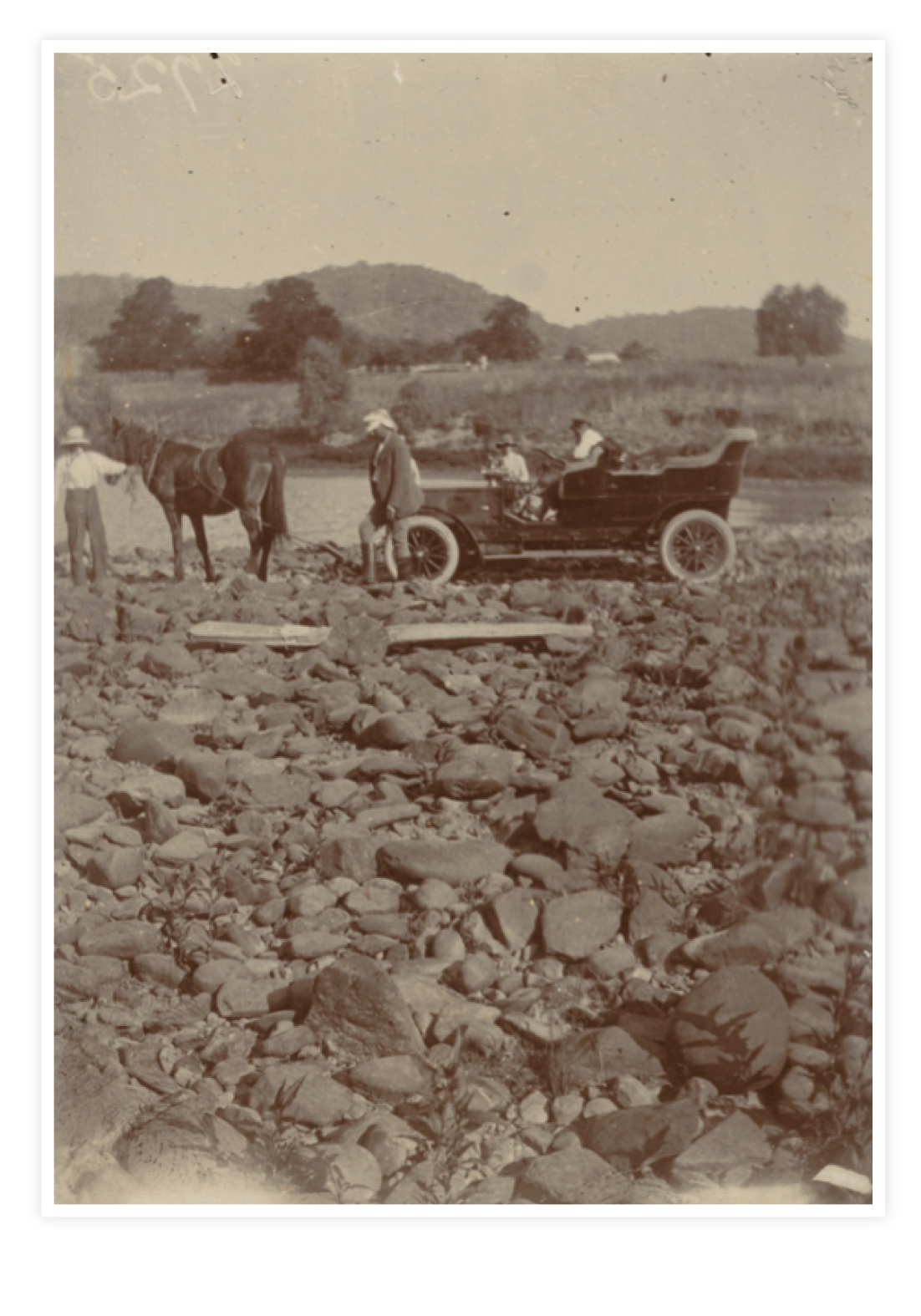
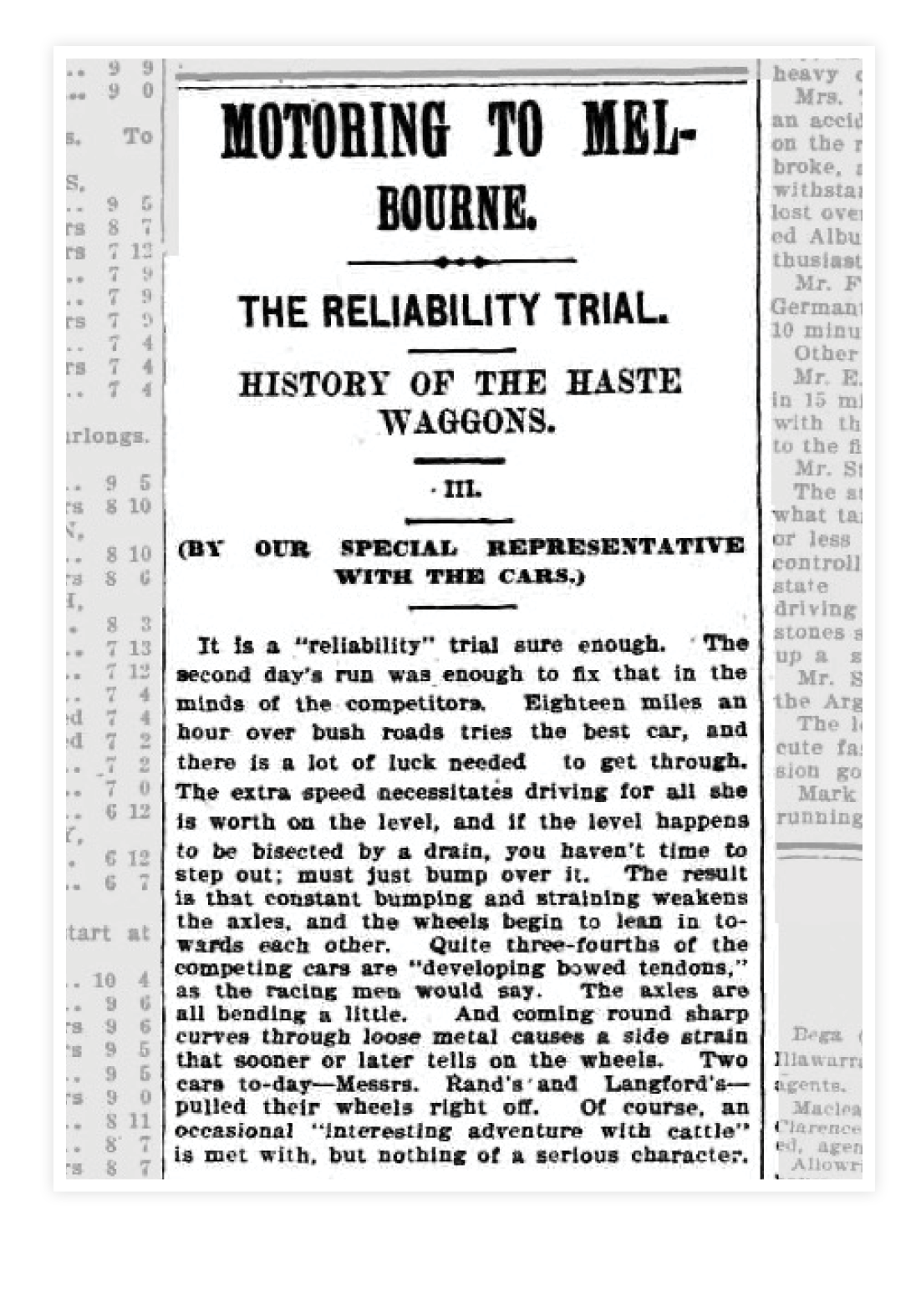
The Dunlop Reliability Trial was not the only occasion when Paterson took on an adventure in a ‘haste-wagon’. I wonder what Paterson would think now that multitudes of what were once called ‘haste-wagons’ have replaced horse-drawn vehicles and the Great South Road has become the Hume Freeway?
https://trove.nla.gov.au/newspaper/article/112752255
Gundagai was just over 80km from Binalong and Illalong where Paterson grew up so he undoubtedly knew Gundagai and Tumut. As Tumut is 34km east of Gundagai and was not on the route of the 1905 Dunlop Reliability Trial, prior knowledge would have enabled Paterson to write about both towns. He would have known that:
‘The mountain road goes up and down
From Gundagai to Tumut town.’
The Road to Gundagai
The Road to Gundagai
The mountain road goes up and down
From Gundagai to Tumut Town.
And, branching off, there runs a track
Across the foothills grim and black,
Across the plains and ranges grey
To Sydney city far away.
It came by chance one day that I
From Tumut rode to Gundagai,
And reached about the evening tide
The crossing where the roads divide;
And, waiting at the crossing place,
I saw a maiden fair of face,
With eyes of deepest violet blue,
And cheeks to match the rose in hue —
The fairest maids Australia knows
Are bred among the mountain snows.
Then, fearing I might go astray,
I asked if she could show the way.
Her voice might well a man bewitch —
Its tones so supple, deep, and rich.
"The tracks are clear," she made reply,
"And this goes down to Sydney Town,
And that one goes to Gundagai."
Then slowly, looking coyly back,
She went along the Sydney track
And I for one was well content
To go the road the lady went;
But round the turn a swain she met —
The kiss she gave him haunts me yet!
I turned and travelled with a sigh
The lonely road to Gundagai.
From A B Paterson’s book Rio’ Grande’s Last Race, 1905
In 1901 Banjo Paterson wrote his poem ‘Lay of the Motor Car’. He published it in 1905, capturing the spirit of the novel experience of travelling in a car.
Lay of the Motor Car
Lay of the Motor Cars
TWe’re away! and the wind whistles shrewd
In our whiskers and teeth;
And the granite-like grey of the road
Seems to slide underneath.
As an eagle might sweep through the sky,
So we sweep through the land,
And pallid, pedestrians fly
When they hear us at hand.
We outpace, we outlast, we outstrip!
Not the fast-fleeing hare,
Nor the racehorses under the whip,
Nor the birds of the air
Can compete with our swiftness sublime,
Our ease and our grace.
We annihilate chickens and time
And policemen and space.
Do you mind that fat grocer who crossed?
How he dropped down to pray
In the road when he saw he was lost;
How he melted away
Underneath, and there rang through the fog
His earsplitting squeal
As he went ---- Is that he or a dog,
That stuff on the wheel?
The Evening News, 24 February 1905.
The Passing of Gundagai
"I'll introdooce a friend!" he said,
"And if you've got a vacant pen
You'd better take him in the shed
And start him shearing straight ahead;
He's one of these here quiet men.
"He never strikes — that ain't his game;
No matter what the others try
He goes on shearing just the same.
I never rightly knew his name —
We always call him 'Gundagai!'"
Our flashest shearer then had gone
To train a racehorse for a race;
And, while his sporting fit was on
He couldn't be relied upon,
So Gundagai shore in his place.
Alas for man's veracity!
For reputations false and true!
This Gundagai turned out to be
For strife and all-round villainy
The very worst I ever knew!
He started racing Jack Devine,
And grumbled when I made him stop.
The pace he showed was extra fine,
But all those pure-bred ewes of mine
Were bleeding like a butcher's shop.
He cursed the sheep, he cursed the shed,
From roof to rafter, floor to shelf:
As for my mongrel ewes, he said,
I ought to get a razor-blade
And shave the blooming things myself.
On Sundays he controlled a "school",
And played "two-up" the livelong day;
And many a young confiding fool
He shore of his financial wool;
And when he lost he would not pay.
He organised a shearers' race,
And "touched" me to provide the prize.
His pack-horse showed surprising pace
And won hands down — he was The Ace,
A well-known racehorse in disguise.
Next day the bruiser of the shed
Displayed an opal-tinted eye,
With large contusions on his head,
He smiled a sickly smile, and said
He's "had a cut at Gundagai!"
But, just as we were getting full
Of Gundagai and all his ways,
A telegram for "Henry Bull"
Arrived. Said he, "That's me — all wool!
Let's see what this here message says."
He opened it; his face grew white,
He dropped the shears and turned away
It ran, "Your wife took bad last night;
Come home at once — no time to write,
We fear she may not last the day."
He got his cheque — I didn't care
To dock him for my mangled ewes;
His store account, we called it square,
Poor wretch! he had enough to bear,
Confronted by such dreadful news.
The shearers raised a little purse
To help a mate, as shearers will.
"To pay the doctor and the nurse.
And, if there should be something worse,
To pay the undertaker's bill."
They wrung his hand in sympathy,
He rode away without a word,
His head hung down in misery . . .
A wandering hawker passing by
Was told of what had just occurred.
"Well! that's a curious thing," he said,
"I've known that feller all his life —
He's had the loan of this here shed!
I know his wife ain't nearly dead,
Because he hasn't got a wife!"
You should have heard the whipcord crack
As angry shearers galloped by;
In vain they tried to fetch him back —
A little dust along the track
Was all they saw of "Gundagai".
The Commonwealth (Annual), 1902
Red Hill or Kiley’s Run (near Tumut)
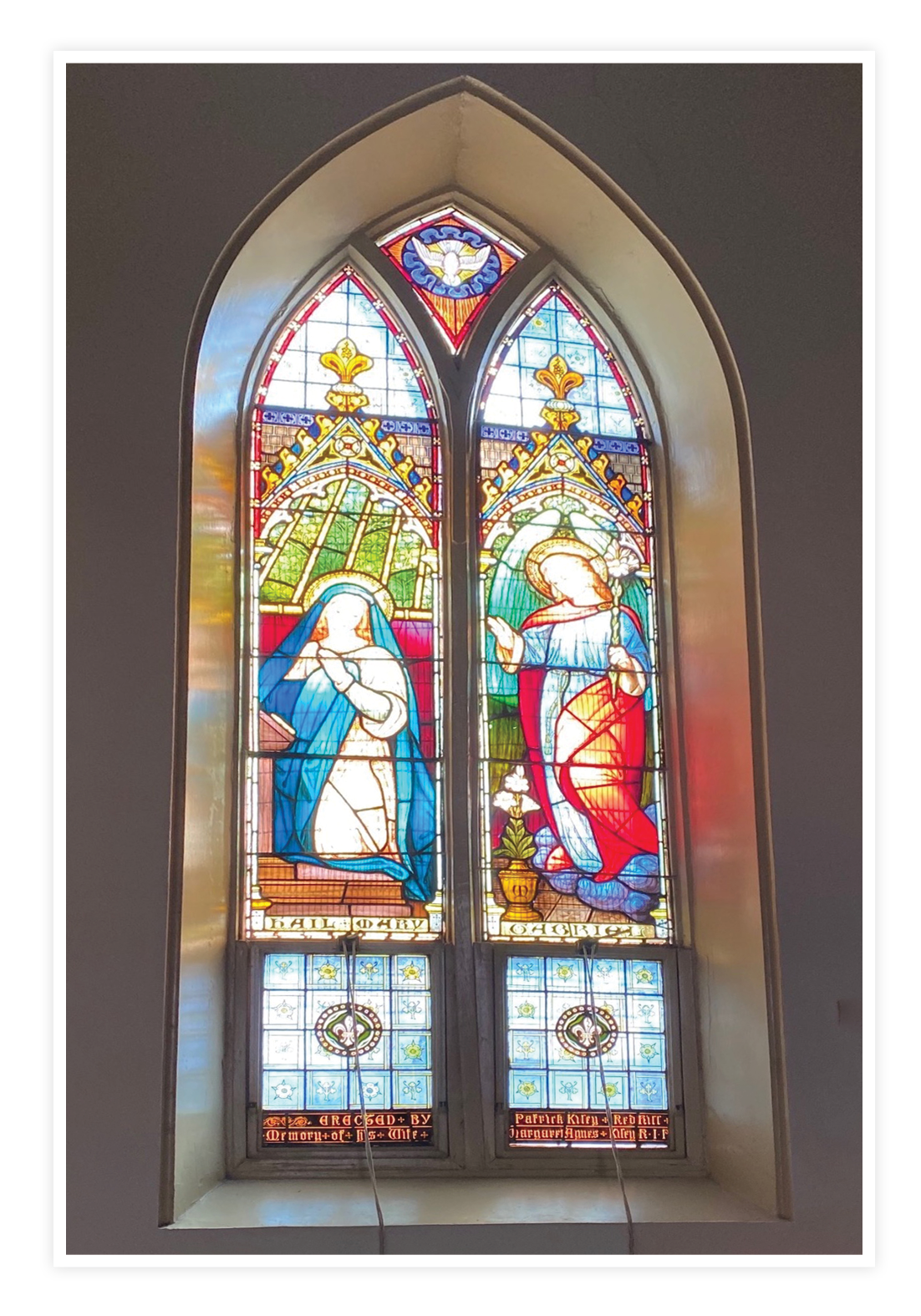
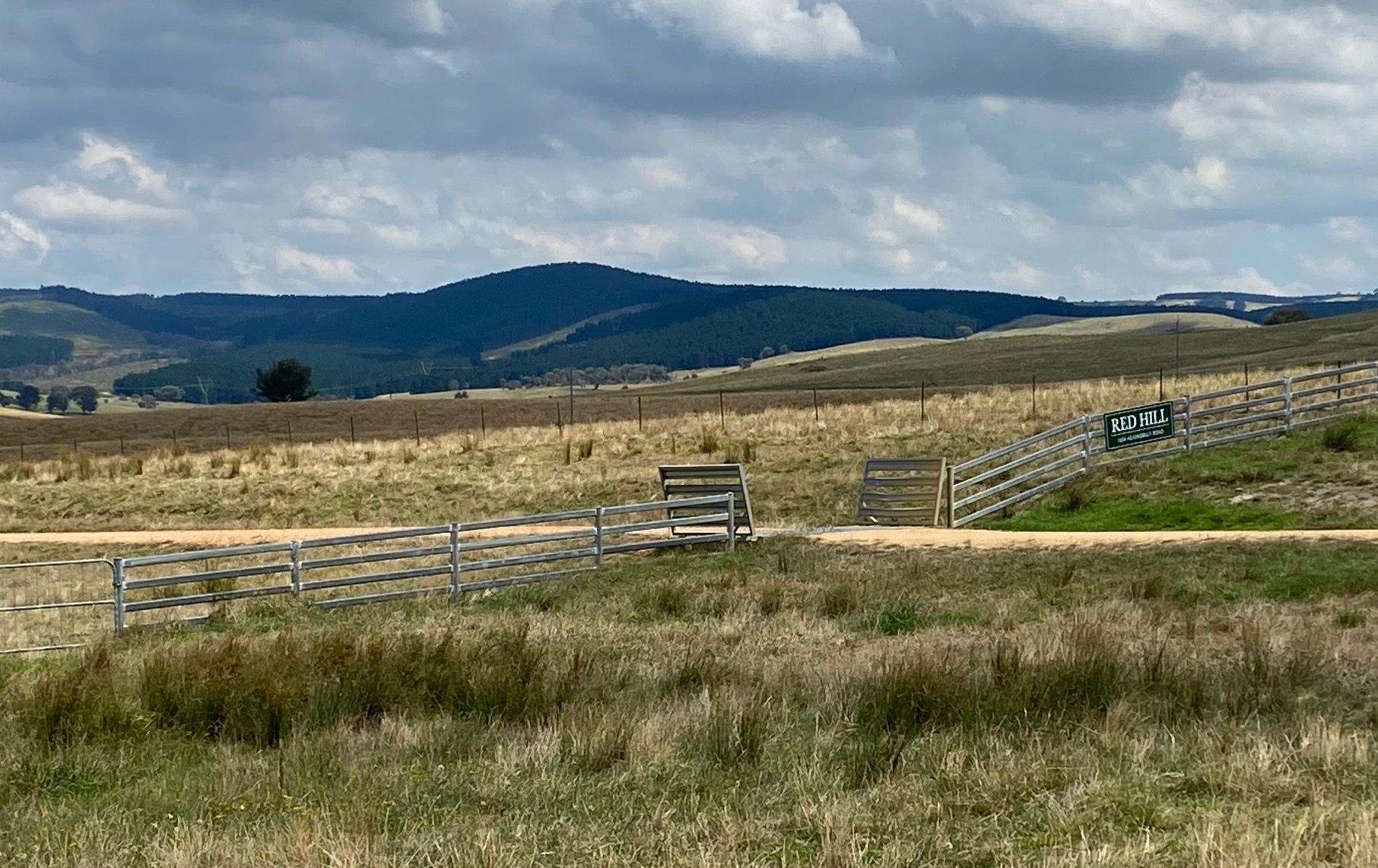
Although Kiley’s Run is located roughly 32km east of Gundagai and 45km north of Tumut and closer to Gundagai than Tumut, early settler Patrick Kiley is commemorated in a stained glass window in the Catholic Church in Tumut and his wife Margaret is buried in the Tumut Pioneer Cemetery. Although in Paterson’s poem ‘On Kiley’s Run’ he is said to have ‘died of a broken heart on Kiley’s Run, he actually died further away on 11 December 1917 at St Ives Private Hospital in Cootamundra (Sydney Morning Herald, 26 December, 1917). He is buried beside Margaret in the Tumut Pioneer Cemetery. According to the Tumut Family History Group the inscription is on the lower part of the tombstone.
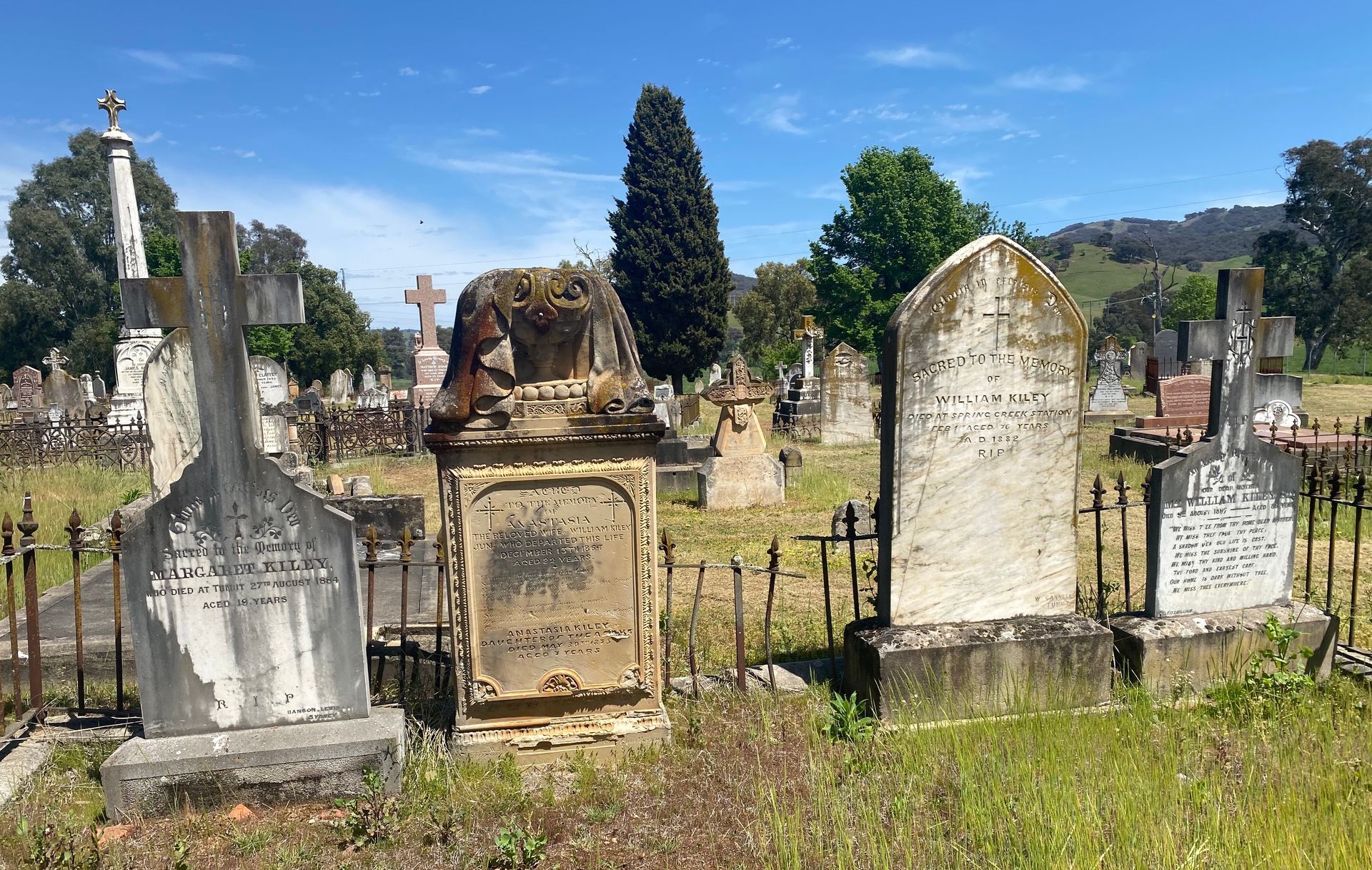
On Kiley’s Run
On Kiley’s Run
The roving breezes come and go
On Kiley’s Run,
The sleepy river murmurs low,
And far away one dimly sees
Beyond the stretch of forest trees –
Beyond the foothills dusk and dun –
The ranges sleeping in the sun
On Kiley’s Run.
'Tis many years since first I came
To Kiley's Run,
More years than I would care to name
Since I, a stripling, used to ride
For miles and miles at Kiley's side,
The while in stirring tones he told
The stories of the days of old
On Kiley's Run.
I see the old bush homestead now
On Kiley's Run,
Just nestled down beneath the brow
Of one small ridge above the sweep
Of river-flat, where willows weep
And jasmine flowers and roses bloom,
The air was laden with perfume
On Kiley's Run.
We lived the good old station life
On Kiley's Run,
With little thought of care or strife.
Old Kiley seldom used to roam,
He liked to make the Run his home,
The swagman never turned away
With empty hand at close of day
From Kiley's Run.
We kept a racehorse now and then
On Kiley's Run,
And neighb'ring stations brought their men
To meetings where the sport was free,
And dainty ladies came to see
Their champions ride; with laugh and song
The old house rang the whole night long
On Kiley's Run.
The station hands were friends I wot
On Kiley's Run,
A reckless, merry-hearted lot –
All splendid riders, and they knew
The `boss' was kindness through and through.
Old Kiley always stood their friend,
And so they served him to the end
On Kiley's Run.
But droughts and losses came apace
To Kiley's Run,
Till ruin stared him in the face;
He toiled and toiled while lived the light,
He dreamed of overdrafts at night:
At length, because he could not pay,
His bankers took the stock away
From Kiley's Run.
Old Kiley stood and saw them go
From Kiley's Run.
The well-bred cattle marching slow;
His stockmen, mates for many a day,
They wrung his hand and went away.
Too old to make another start,
Old Kiley died -- of broken heart,
On Kiley's Run.
. . . . .
The owner lives in England now
Of Kiley's Run.
He knows a racehorse from a cow;
But that is all he knows of stock:
His chiefest care is how to dock
Expenses, and he sends from town
To cut the shearers' wages down
On Kiley's Run.
There are no neighbours anywhere
Near Kiley's Run.
The hospitable homes are bare,
The gardens gone; for no pretence
Must hinder cutting down expense:
The homestead that we held so dear
Contains a half-paid overseer
On Kiley's Run.
All life and sport and hope have died
On Kiley's Run.
No longer there the stockmen ride;
For sour-faced boundary riders creep
On mongrel horses after sheep,
Through ranges where, at racing speed,
Old Kiley used to `wheel the lead'
On Kiley's Run.
There runs a lane for thirty miles
Through Kiley's Run.
On either side the herbage smiles,
But wretched trav'lling sheep must pass
Without a drink or blade of grass
Thro' that long lane of death and shame:
The weary drovers curse the name
Of Kiley's Run.
The name itself is changed of late
Of Kiley's Run.
They call it `Chandos Park Estate'.
The lonely swagman through the dark
Must hump his swag past Chandos Park.
The name is English, don't you see,
The old name sweeter sounds to me
Of `Kiley's Run'.
I cannot guess what fate will bring
To Kiley's Run –
For chances come and changes ring –
I scarcely think 'twill always be
Locked up to suit an absentee;
And if he lets it out in farms
His tenants soon will carry arms
On Kiley's Run.
The Bulletin, 20 December 1890.
Some say that when Paterson wrote ‘On Kiley’s Run’, he was describing the fate of his birthplace, the home of his aunt and uncle Rose and John Templar. Paterson’s poem depicts the fate of many earlier settlers and latter day farmers who didn’t understand the extremes of Australian seasons and lost everything in drought years. It does not necessarily reflect life on Kiley’s run after Patrick Kiley’s death.
Paterson mentioned Kiley again in Father Riley’s Horse (1899)
‘Twas the horse thief, Andy Regan, that was hunted like a dog
By the troopers of upper Murray side,
They had searched in every gully – they had looked in every log,
But never sight nor track of him they spied,
Till the priest at Kiley’s Crossing heard a knocking very late
And a whisper “Father Riley – come across!”
So his Rev’rence in pyjamas trotted softly to the gate
And admitted Andy Regan – and a horse!
Under the Shadow of Kiley’s Hill
Under the Shadow of Kiley’s Hill
This is the place where they all were bred;
Some of the rafters are standing still;
Now they are scattered and lost and dead,
Every one from the old nest fled,
Out of the shadow of Kiley's Hill.
Better it is that they ne'er came back —
Changes and chances are quickly rung;
Now the old homestead is gone to rack,
Green is the grass on the well-worn track
Down by the gate where the roses clung.
Gone is the garden they kept with care;
Left to decay at its own sweet will,
Fruit trees and flower beds eaten bare,
Cattle and sheep where the roses were,
Under the shadow of Kiley's Hill.
Where are the children that throve and grew
In the old homestead in days gone by?
One is away on the far Barcoo
Watching his cattle the long year through,
Watching them starve in the droughts and die.
One in the town where all cares are rife,
Weary with troubles that cramp and kill,
Fain would be done with the restless strife,
Fain would go back to the old bush life,
Back to the shadow of Kiley's Hill.
One is away on the roving quest,
Seeking his share of the golden spoil,
Out in the wastes of the trackless west,
Wandering ever he gives the best
Of his years and strength to the hopeless toil.
What of the parents? That unkept mound
Shows where they slumber united still;
Rough is their grave, but they sleep as sound
Out on the range as on holy ground,
Under the shadow of Kiley's Hill.
The Man from Snowy River and Other Verses 1895
This poem perhaps strikes a chord for many country Australian families in which death of a patriarch scatters the family. Natural disasters including bushfires and floods break up family farms and businesses and scatter families as individual family members have to remake their lives.






Acknowledgements
The Upper Murray Historical Society wishes to acknowledge all of the above organisations for their support and thank the
National Library of Australia (NLA) together with
Mr Alistair Campbell for their assistance and their permission to use images from the
Papers of Andrew Barton ‘Banjo’ Paterson (MS 10483), NLA. For more information
click here.
History brought to life by
CalvertandCo.com
© Copyright protected 2026, Calvert & Co, Honor Auchinleck, and The Man From Snowy River Museum. All rights reserved.