
The Banjo Paterson High Country Trail
Kosciuszko, The Snowy River, Tom Groggin and Jack Riley
The photographs and captions from Banjo Paterson's albums and Banjo Paterson's writings show that Jack, or Johnny Riley (Paterson referred to him as Johnny Riley) had a role in Banjo Paterson's expeditions to Tom Groggin and to the summit of Kosciusko and indeed could be part of Paterson's inspiration for his poem 'The Man from Snowy River'. We will never know for sure if Jack was the inspiration or if 'The Man' in the epic poem was a combination of a number of colourful High Country characters know to Paterson.
The rugged beauty of the Kosciuszko and Snowy River region and tales stockmen told of their rides must surely have been part of Paterson's inspiration.
The Man from Snow River
The Man from Snow River
There was movement at the station, for the word had passed around
That the colt from Old Regret had got away,
And had joined the wild bush horses - he was worth a thousand pound,
So all the cracks had gathered to the fray.
All the tried and noted riders from the stations near and far
Had mustered at the homestead overnight,
For the bushmen love hard riding where the wild bush horses are,
And the stock-horse snuffs the battle with delight.
There was Harrison, who made his pile when Pardon won the cup,
The old man with his hair as white as snow;
But few could ride beside him when his blood was fairly up —
He would go wherever horse and man could go.
And Clancy of the Overflow came down to lend a hand,
No better horseman ever held the reins;
For never horse could throw him while the saddle girths would stand,
He learnt to ride while droving on the plains.
And one was there, a stripling on a small and weedy beast;
He was something like a racehorse undersized,
With a touch of Timor pony — three parts thoroughbred at least —
And such as are by mountain horsemen prized.
He was hard and tough and wiry — just the sort that won't say die —
There was courage in his quick impatient tread;
And he bore the badge of gameness in his bright and fiery eye,
And the proud and lofty carriage of his head.
But still so slight and weedy, one would doubt his power to stay,
And the old man said, "That horse will never do
For a long and tiring gallop - lad, you'd better stop away,
Those hills are far too rough for such as you."
So he waited sad and wistful — only Clancy stood his friend —
"I think we ought to let him come," he said;
"I warrant he'll be with us when he's wanted at the end,
For both his horse and he are mountain bred."
"He hails from Snowy River, up by Kosciusko's side,
Where the hills are twice as steep and twice as rough,
Where a horse's hoofs strike firelight from the flint stones every stride,
The man that holds his own is good enough.
And the Snowy River riders on the mountains make their home,
Where the river runs those giant hills between;
I have seen full many horsemen since I first commenced to roam,
But nowhere yet such horsemen have I seen."
So he went; they found the horses by the big mimosa clump,
They raced away towards the mountain's brow,
And the old man gave his orders, "Boys, go at them from the jump,
No use to try for fancy riding now.
And, Clancy, you must wheel them, try and wheel them to the right.
Ride boldly, lad, and never fear the spills,
For never yet was rider that could keep the mob in sight,
If once they gain the shelter of those hills."
So Clancy rode to wheel them — he was racing on the wing
Where the best and boldest riders take their place,
And he raced his stockhorse past them, and he made the ranges ring
With the stockwhip, as he met them face to face.
Then they halted for a moment, while he swung the dreaded lash,
But they saw their well-loved mountain full in view,
And they charged beneath the stockwhip with a sharp and sudden dash,
And off into the mountain scrub they flew.
Then fast the horsemen followed, where the gorges deep and black
Resounded to the thunder of their tread,
And the stockwhips woke the echoes, and they fiercely answered back
From cliffs and crags that beetled overhead.
And upward, ever upward, the wild horses held their way,
Where Mountain Ash and Kurrajong grew wide;
And the old man muttered fiercely, "We may bid the mob good day,
No man can hold them down the other side."
When they reached the mountain's summit, even Clancy took a pull -
It well might make the boldest hold their breath;
The wild hop scrub grew thickly, and the hidden ground was full
Of wombat holes, and any slip was death.
But the man from Snowy River let the pony have his head,
And he swung his stockwhip round and gave a cheer,
And he raced him down the mountain like a torrent down its bed,
While the others stood and watched in very fear.
He sent the flint-stones flying, but the pony kept his feet,
He cleared the fallen timbers in his stride,
And the man from Snowy River never shifted in his seat —
It was grand to see that mountain horseman ride.
Through the stringy barks and saplings, on the rough and broken ground,
Down the hillside at a racing pace he went;
And he never drew the bridle till he landed safe and sound,
At the bottom of that terrible descent.
He was right among the horses as they climbed the farther hill
And the watchers on the mountain standing mute,
Saw him ply the stockwhip fiercely; he was right among them still,
As he raced across the clearing in pursuit.
Then they lost him for a moment, where two mountain gullies met
In the ranges - but a final glimpse reveals
On a dim and distant hillside the wild horses racing yet,
With the man from Snowy River at their heels.
And he ran them single-handed till their sides were white with foam.
He followed like a bloodhound on their track,
Till they halted cowed and beaten, then he turned their heads for home,
And alone and unassisted brought them back.
But his hardy mountain pony he could scarcely raise a trot,
He was blood from hip to shoulder from the spur;
But his pluck was still undaunted, and his courage fiery hot,
For never yet was mountain horse a cur.
And down by Kosciusko, where the pine-clad ridges* raise
Their torn and rugged battlements on high,
Where the air is clear as crystal, and the white stars fairly blaze
At midnight in the cold and frosty sky,
And where around the Overflow the reed -beds sweep and sway
To the breezes, and the rolling plains are wide,
The man from Snowy River is a household word today,
And the stockmen tell the story of his ride.
The Bulletin, 26 April 1890
The Bulletin, 2 December 1888
Towards the end of the nineteenth century it is likely that bushfires had not ravaged parts of the High Country as much as they have during the last 100 years. Native pines take time to regenerate after fire and it is possible that at the time of Paterson’s expedition(s), they may have been plentiful.
Banjo’s poem ‘Johnny Riley’s Cow’ is likely to refer to the country where he lived on Indi Run above the Indi river near Tom Groggin. Tom Groggin was a considerable distance from the nearest customs man in the Upper Murray and it is unlikely that Johnny would ever have been caught to pay taxes for his cow that crossed the River:
Johnny Riley’s Cow
Johnny Riley’s Cow: A Ballad of Federation *
Come all you Federationists and hearken to me now—
I’ve a story will instruct you very highly.
‘Tis about a free selector and his Federation cow
And the free selector’s name was Johnny Riley
He was farming forty acres on the Upper Murray side,
Where the river’s very shallow and it isn’t very wide,
And his cow could cross the river every single time she tried.
“Bad scran, to such a cow,” said Johnny Riley.’
“Sure, I belong to Sydney-side and when she goes across
‘Tis a loss to New South Wales,’ said Johnny Riley.
“Are all the Sydney merchants to be saddled with a loss
to propitiate a cow,” said Johnny Riley,
“For she splashes through the river, just to feed on foreign ground,
And never pays the tax at all, be jabers, I’ll be bound,
I owe them darn Victorians about a thousand pound
In fines for that there cow,” said Johnny Riley
“And I’m down on Federation—it will cripple New South Wales—
But the cow don’t seem to care,” said Johnny Riley.
“For what will come to Sydney, if the Murray traffic fails
And the Riverina trade?” said Johnny Riley
“I’ve argued and expounded but they can’t be made to see
That it makes no shade of odds at all to folks like you and me:
The Sydney landlords may be hurt, but what’s the odds?” said he.
She’s a narrow-minded cow,” said Johnny Riley.
You see the cow is Queensland-bred and doesn’t care a pin
If the Sydney rents or Melbourne’s rise more highly—
To keep our country’s union back for landlords is a sin;
That’s the verdict of the cow,” said Johnny Riley,
“It’s Australia for Australians—one people east and west—
And all my do as I do—travel where the grass is best.
Free trade with one another and protection from the rest.
She’s a narrow-minded cow,” said Johnny Riley
So, here’s luck to Johnny Riley and his Federation cow:
Their example we should value very highly.
“Twixt Melbourne town and Sydney it’s a narrow-minded row,
For the trade is none so much,” said Johnny Riley.
“If Sydney gets the capital and Melbourne gets the trade
From Riverina stations—well, a fair exchange is made.”
“And the twenty yards of river, we’ll no longer be afraid
When we cross it,” says the cow to Johnny Riley.
Published after Banjo Paterson’s death
* Before the Federation of Australia in 1901, there was a duty on livestock passing from New South Wales to Victoria with heavy penalties for anyone caught smuggling. Tom Mitchell wrote in an unpublished story, ‘Smuggling was widespread in the Upper Murray with many people slipping horses, or sheep or cattle across the River, and there were all sorts of comings and goings to the River through the scrub at all hours of the night.’
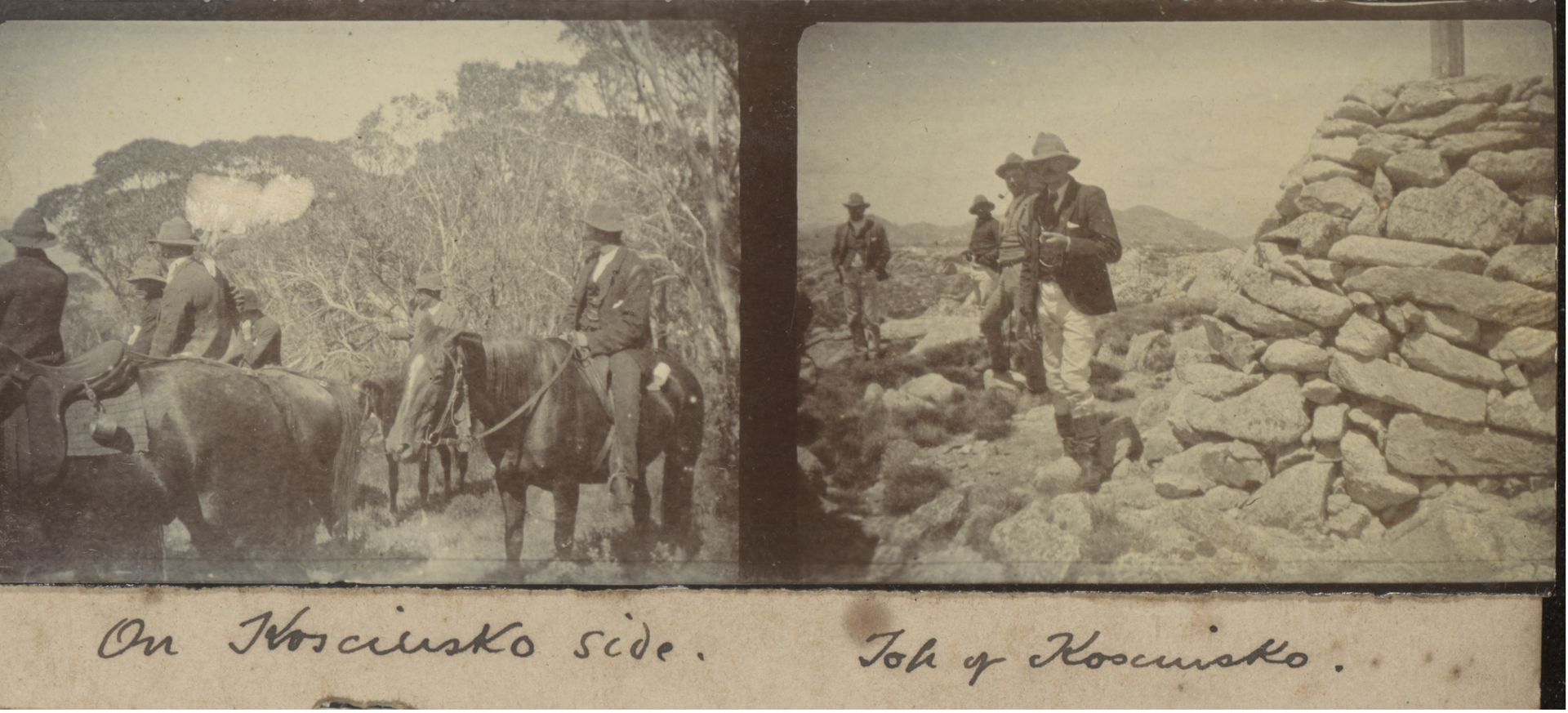
Photograph from Banjo Paterson’s album (Source: The Papers of Andrew Barton ‘Banjo’ Paterson 1807 – 1950 NLA MS10483/10/30/ 38)
Banjo Paterson’s photographs prove that Banjo Paterson had visited the High Country and that he had also visited the Upper Murray and Corryong. His writings flesh out the details of his contact. On 16 November 1917, from Moascar in Egypt, Paterson told his wife “I am very sorry to hear of Walter Mitchell’s death. Strange to say I took a fit to write to him about two months ago it would arrive after his death’.
https://nla.gov.au/nla.obj-2854397063/view?partId=nla.obj-2873875381
Over a decade later Paterson adds further detail to his relationship with Walter Mitchell. On 24 August 1932 Paterson wrote in the Sydney Mail, ‘Reading the name Tom Mitchell as a winner of ski-ing championships this year, one is reminded of his father, Walter Mitchell, who was a well-known person in sport of a very different nature from ski-ing…’
‘Their station at Bringenbrong, was within a day and a half ride of the summit of Kosciusko, and the brothers often made a camping trip to the top of the mountain with pack-horses. It would be hard to imagine any more typically Australian trip, for the journey started down the Murray Valley, where the melted snow ran over beds of sparkling pebbles. On the trip through the Murray Gates, the Leatherbarrel, and Tom Groggin, tourists were so infrequent that the walleroos would sit on rocks and hardly bother to get out of the road as the cavalcade went by. Dingoes followed the expedition for miles, possibly hoping that something edible would be dropped from the packhorses, lyrebirds (locally known as pheasants) were as thick as fowls in a barnyard.’
https://trove.nla.gov.au/newspaper/article/166225211
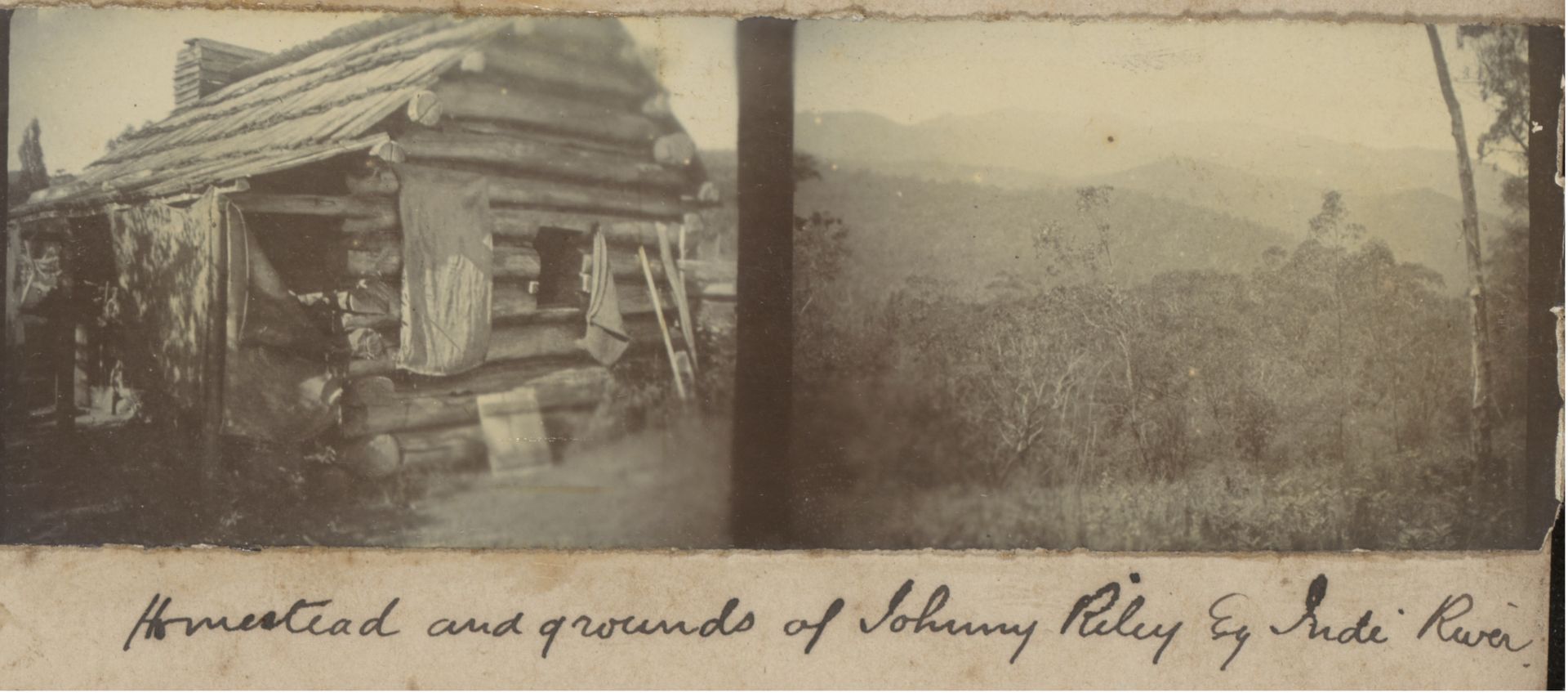
Photograph from Banjo Paterson's album (Source: The Papers of Andrew Barton ‘Banjo’ Paterson NLA MS10483/10/File 30/38)
As Paterson wrote about his trip with the Mitchell brothers possibly some forty years after it had taken place, it is no surprise that he became slightly confused about the order of the locations on the route. He should have written Murray Gates, Tom Groggin and then Leatherbarrel. Paterson’s photograph of Johnny Riley point out “Mt Pilot’ on ascending Mt Kosciuszko proves that Jack or Johnny Riley accompanied the expedition to the summit. Paterson excels with poetry and his sense of place while some of the dates of events remain an enigma.
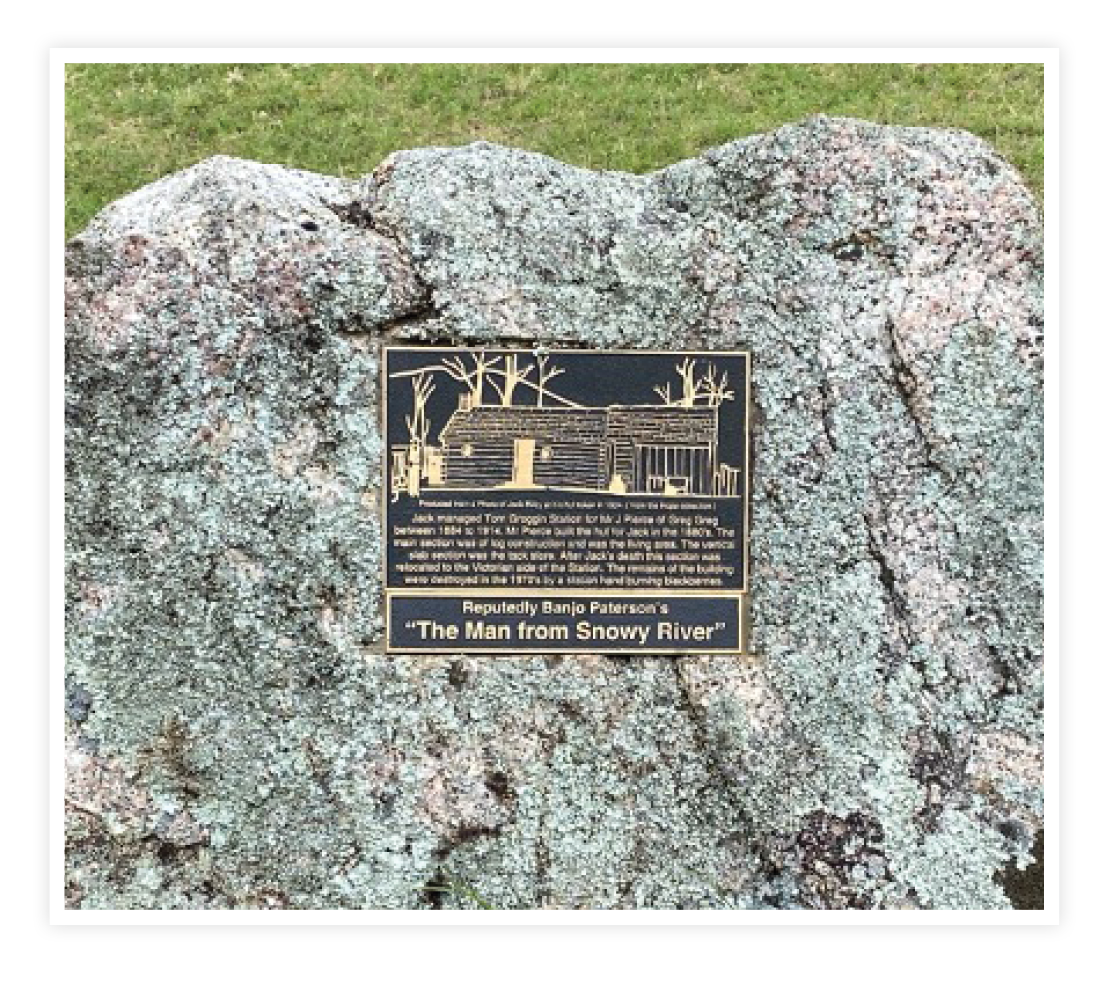
Paterson provided more information about his experiences in the Upper Murray and Kosciuszko in a transcript for a talk (NLA MS10483 File 85, Box 4):
‘I’ve heard of men getting good horses out of a brumby mob but the only ones ever I saw were up on Mt Kosciusko. I went up to the summit with the Mitchells who afterwards owned Trafalgar. I made this trip years before there [were] any buildings or any roads on Kosciusko; and when we got to the summit we changed onto brumby horses they had with them. You see, there are quagmires, patches of rotten ground that look quite sound till you get on them and then a horse will bog down to his ears.
The flat country horses would walk into those places and get smothered but you couldn’t get a Kosciusko brumby onto one of them with a block and tackle'.
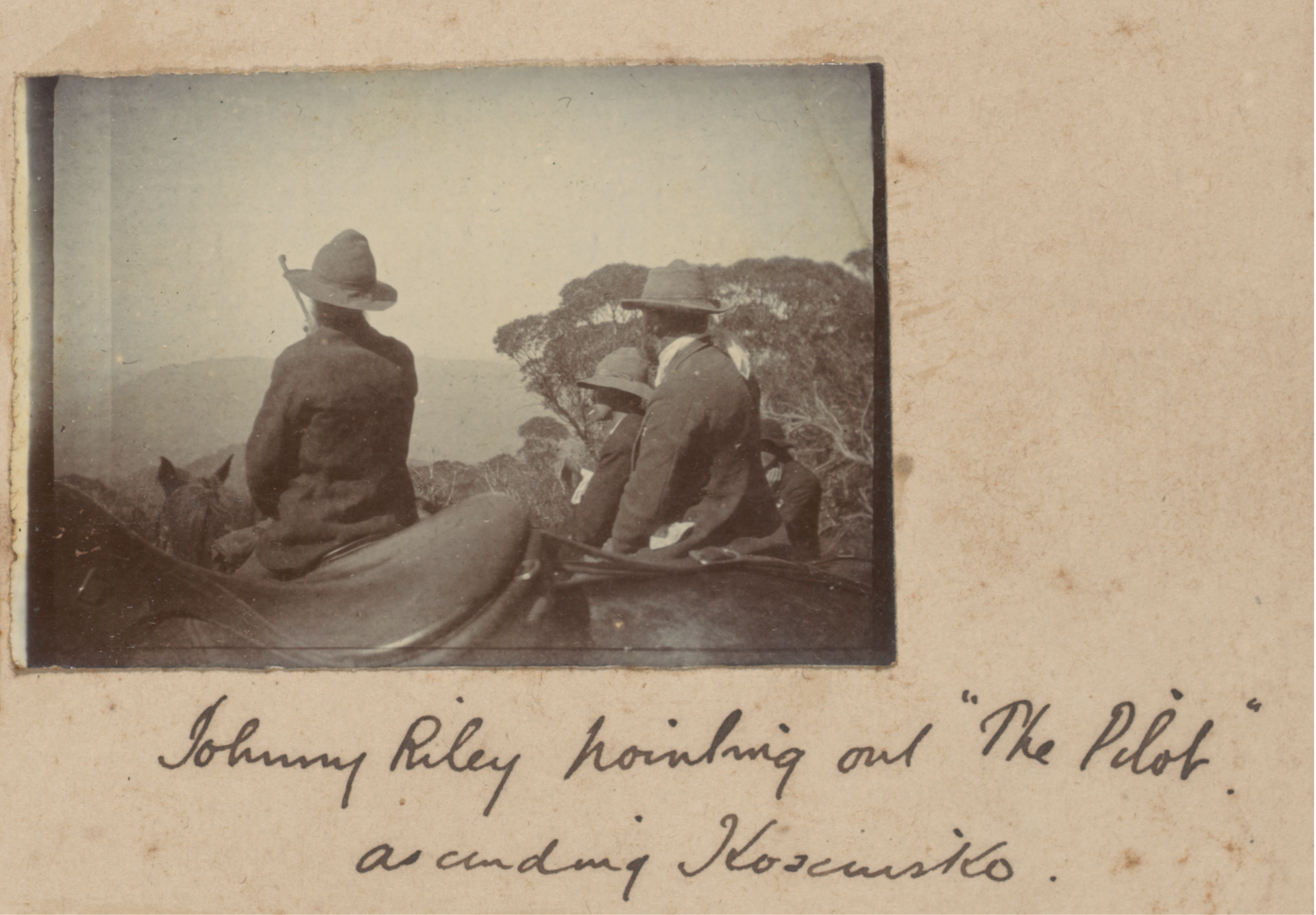
As the road was not completed as far as the summit of Mt Kosciuszko until 1909, Paterson must have been referring to a trip he made to the summit either earlier in the 20th century, or perhaps even back in the late 1880s around the time he was writing his poem The Man from Snowy River. It seems likely that Johnny or Jack Riley could have been part of the inspiration for The Man from Snowy River. As Paterson had lived in the Monaro, he was undoubtedly, a man from Snowy River, if not ‘The Man’.
Paterson's observations about the quagmires on Mt Kosciuszko suggest that either the topography of Kosciuszko has changed in over a century as there are no quagmires on the Summit now. It is possible that Paterson's concept of Mt Kosciuszko included a larger area of the High Country. The photograph showing a group of horsemen and drift of snow and captioned 'On top of Kosciusko' doesn't appear to be an image of the summit of Kosciusko which would support the possibility that that Paterson's idea of Mt Kosciuszko was rather elastic.
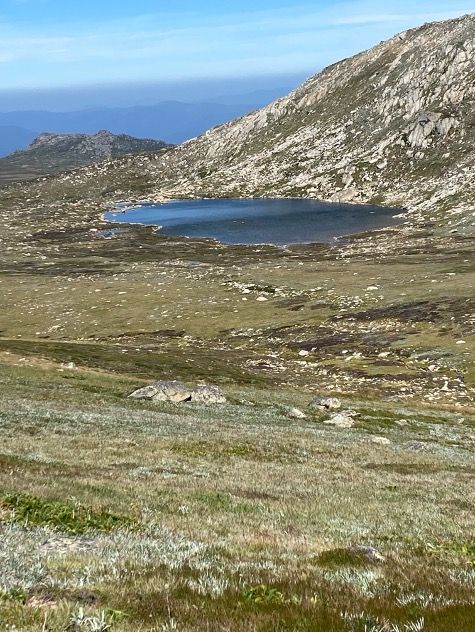
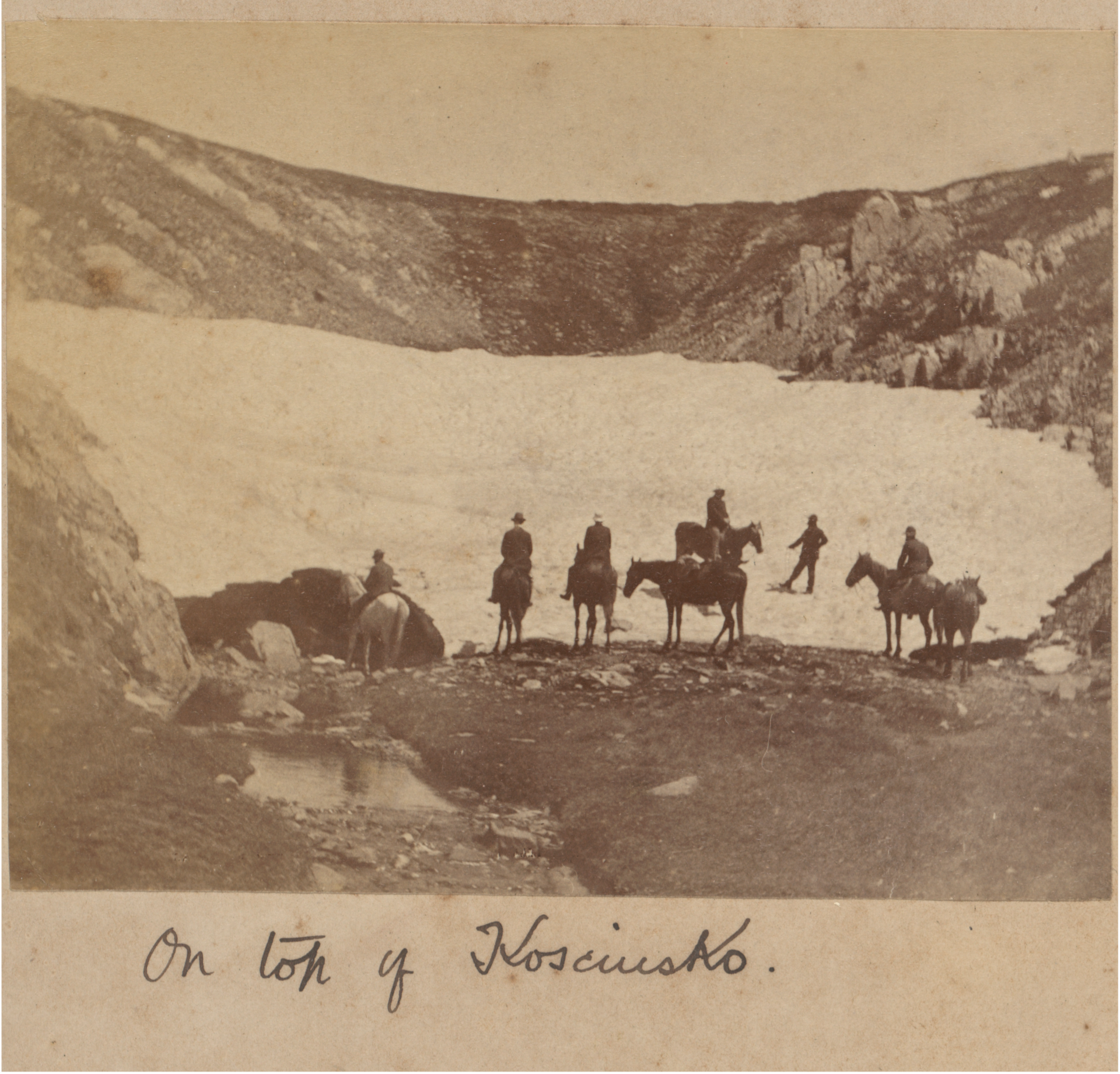
Source: From the Papers of Andrew Barton (Banjo) Paterson NLA MS10483/10/30/24
Acknowledgements
The Upper Murray Historical Society wishes to acknowledge all of the above organisations for their support and thank the
National Library of Australia (NLA) together with
Mr Alistair Campbell for their assistance and their permission to use images from the
Papers of Andrew Barton ‘Banjo’ Paterson (MS 10483), NLA. For more information
click here.
History brought to life by
CalvertandCo.com
© Copyright protected 2026, Calvert & Co, Honor Auchinleck, and The Man From Snowy River Museum. All rights reserved.